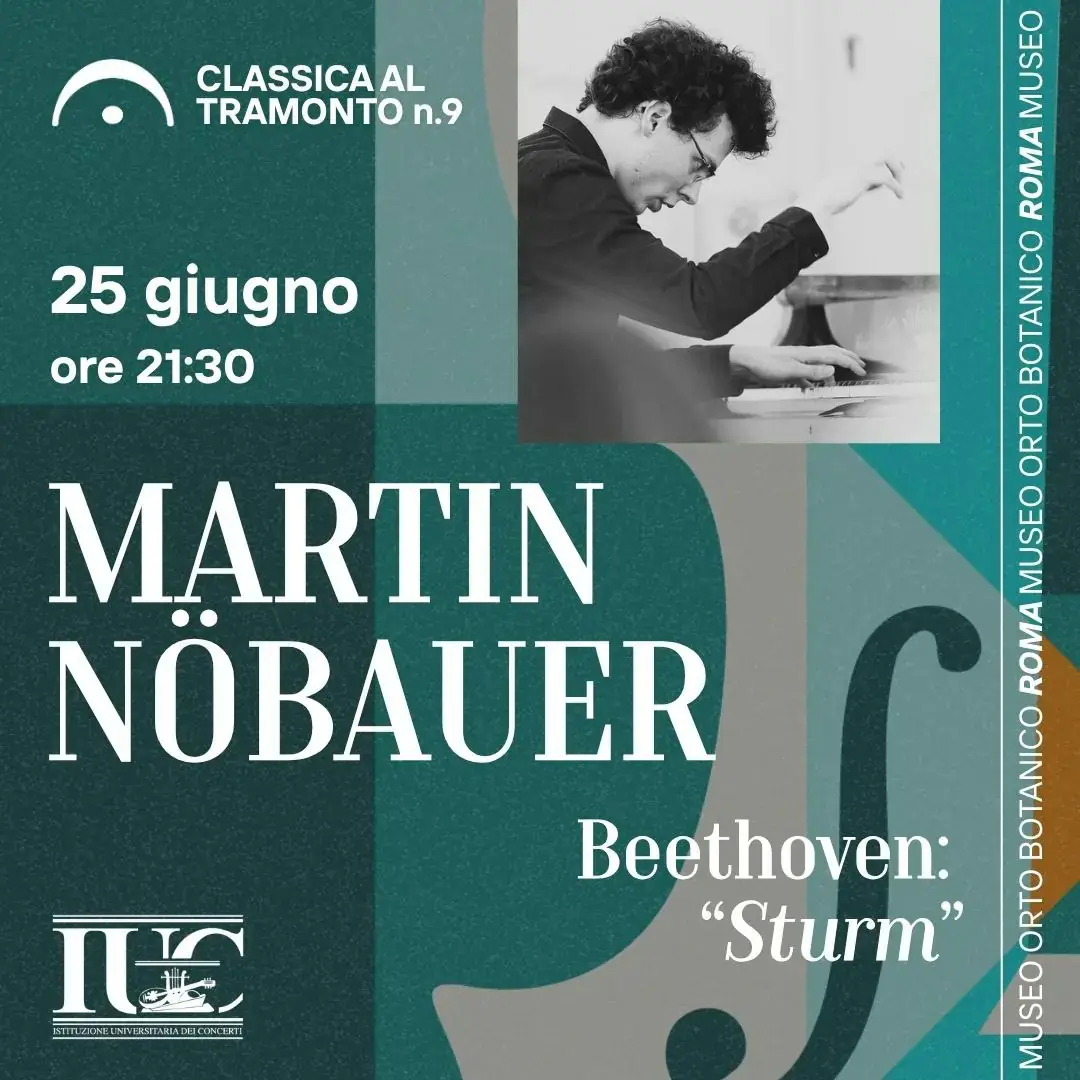
Information
Alessandro Simoni offers a program that traverses various eras of piano literature, relating formal and linguistic transformations from baroque counterpoint to contemporary literature. From Johann Sebastian Bach's Prelude and Fugue BWV 854 from the Well-Tempered Clavier II, based on contrapuntal clarity and imitative density, to Ludwig van Beethoven's Sonata Op. 10 No. 3, which redefines the sonata form through greater expressive intensity and a more free handling of harmony and temporality. In Fryderyk Chopin, the relationship between form and idiomatic writing translates into the reworking of the dance (Mazurka Op. 24 No. 1) and a broad and contrasting form (Scherzo Op. 39 No. 3). With Aleksandr Nikolaevič Skrjabin, the crisis of functional tonality leads to a continuous form and a post-tonal harmonic organization, while in Alexey Kurbatov's 'Lost in Darkness' Op. 34, the writing is oriented towards timbral and processual parameters, configuring an open form based on sonic processes.